An outdoor multigym becomes a community fitness area only when equipment, movement space, access, supervision and maintenance work together. By the end, you will be able to plan a practical circuit, match stations to local users, compare alternatives and write a purchase brief that can be checked after installation.
Key takeaways
- Survey access, ground conditions, shade and clearance before selecting equipment.
- Build the circuit around movements such as pushing, pulling, stepping and core work.
- Specify users, station spacing, materials, surfacing, inspections and maintenance responsibilities.
- Choose outdoor equipment that matches supervision levels and expected user behaviour.
Design the Site Before You Choose the Equipment
An open lawn becomes a usable community fitness area only when people can reach, use and leave it comfortably. Start the park fitness design with the site, then choose an outdoor multigym that fits its conditions.
Plan these physical features before selecting stations:
- A firm, step-free circulation path linking entrances, parking, toilets, seating and every machine.
- Equipment spacing based on the full movement envelope, including rotating arms, pedals, suspended parts and dismounting users—not just concrete-pad footprints.
- Grading, sub-base drainage, edge details and inspection access that prevent standing water, slippery surfaces and freeze–thaw damage.
- Shade over seating and waiting areas, plus shade near high-use stations where practical.
- Even lighting for early and late users without glare into nearby homes or roads.
- Drinking water, toilets and benches close enough for older adults and people managing fatigue.
- Clear sightlines for informal supervision, with a defined buffer separating fitness equipment from children’s play zones.
| Site feature | Stronger choice | Problem with a weaker choice |
|---|---|---|
| Access | Accessible route plus clear approach space at each machine type | A “universal” machine remains unusable if users cannot reach or position beside it |
| Surface | Paved or resilient surface with drainage fall and stable edges | Mud, puddles and damaged surfacing block mobility-aid users |
| Foundation | Anchors and footings designed for soil, frost, drainage and cyclic loads | A level slab can still crack, tilt or loosen under repeated movement |
| Visibility | Open views from paths and seating | Hidden corners discourage use and delay help after a fall |
Build a Circuit Around Movements, Not Product Names
A useful multigym circuit moves from preparation to aerobic work, resistance, coordination and recovery. Users should walk or move easily for five to ten minutes before taking a station, then complete one round at a comfortable pace. Beginners can use 8–12 controlled repetitions, or 30–60 seconds of movement, resting 30–90 seconds before the next station.
1. Start with stepping and cycling stations. They raise body temperature and heart rate without the impact of running, making them suitable for beginners and older users.
2. Move to a leg-press or sit-to-stand station. It trains the hips, thighs and glutes, which support climbing steps, rising from benches and walking across the park.
3. Follow with pushing and pulling exercises. A chest press develops pushing strength, while a row or pull-down develops the upper back and arms; alternating them reduces fatigue in one muscle group.
4. Add a balance and mobility station. Low beams, step platforms, gentle stretch rails or supported movement stations challenge control and joint range rather than maximum strength.
5. Finish with slow walking and relaxed mobility. This cooldown gives breathing and heart rate time to settle instead of ending abruptly after resistance work.
Keep the route obvious, with enough room to enter, use and leave each station without crossing another user’s moving range. After two to three weeks of comfortable sessions, beginners can add a second round or extend work time; increase only one of those variables at once.
Match Stations to Users and Compare the Alternatives
Children need a separate play zone, not adult fitness machines. Specify playground equipment to EN 1176, keep moving parts away from adult circulation, and provide low-height, supervised activity. EN 16630 applies to permanently installed, freely accessible outdoor fitness equipment; it does not replace playground standards.
| User | Suitable mix | Avoid or add |
|---|---|---|
| Children | EN 1176 play equipment, stepping and balance elements | Adult machines without age guidance |
| Older adults | Seated cycle, low stepper, gentle leg press, balance rail and mobility station | High platforms and fast rotating mechanisms |
| Beginners | Walkers, cycles, easy push-pull stations and clear instructions | A circuit built only around maximum resistance |
| Regular exercisers | Adjustable resistance, pull-up options, leg press, rower and open space for intervals | A fixed, repetitive circuit with no progression |
| Wheelchair users | Wheelchair accessible exercise stations, firm approach space and clear transfer areas | A “universal” label without an accessible route |
| Injury recovery | Seated, low-load stations with stable handholds and clinician-approved range | Uncontrolled impact, twisting or deep loaded movement |
Outdoor gym equipment selection works best when each group gets a usable route, not just one token machine. Provide at least one accessible machine of each type offered, with compliant clear floor space; the route to it is a separate design check.
A multi-station gym saves footprint and supervision time, while separate machines let users spread out and reduce queues. A walking track delivers safer aerobic volume, calisthenics bars suit strong users but exclude many beginners, and an indoor gym offers finer load control.
Use open lawn for warm-ups, recovery and group sessions, not as a substitute for equipment with handholds.
Turn the Purchase Brief Into a Checkable Site Specification
Obtain a checkable site specification before comparing outdoor multigym models; otherwise, a product that fits the brochure can fail on access, drainage or structural stability.
1. Record the available rectangle, circulation route, equipment footprint, fall zones and clear approach spaces for every station. Mark nearby play areas, paths, seating, lighting and emergency access.
2. Specify the surface by use, not appearance. Ask whether the design needs impact-attenuating surfacing, firm wheelchair access, slip resistance, trip resistance and inspection access. Hardstanding can improve access but does not automatically provide adequate fall protection.
3. Commission the foundation design for the actual soil, frost or expansive-ground conditions, drainage, overturning and cyclic user loads. Obtain concrete dimensions, reinforcement, anchor-bolt layout and foundation depth; a level slab is not proof of a suitable base.
4. Put drainage and slope limits on the drawing. Confirm finished gradients, sub-base drainage, edge details and discharge points, because standing water corrodes equipment, damages resilient surfacing and blocks mobility-aid routes.
5. Ask the supplier to identify the equipment category and standard: EN 16630 for permanently installed, freely accessible outdoor fitness equipment, or EN 1176 where children’s playground equipment is included. Request installation drawings, load data, maintenance instructions, accessible clearances and fall-area requirements.
Fabrotech Engineers should be asked for model-specific foundation, anchoring, clearance and maintenance documents rather than a product certificate alone. The completed installation—not just the machine—must be checked against the drawings, manufacturer’s instructions and applicable accessibility requirements, including the 2010 ADA Standards where they govern the project.
Related products
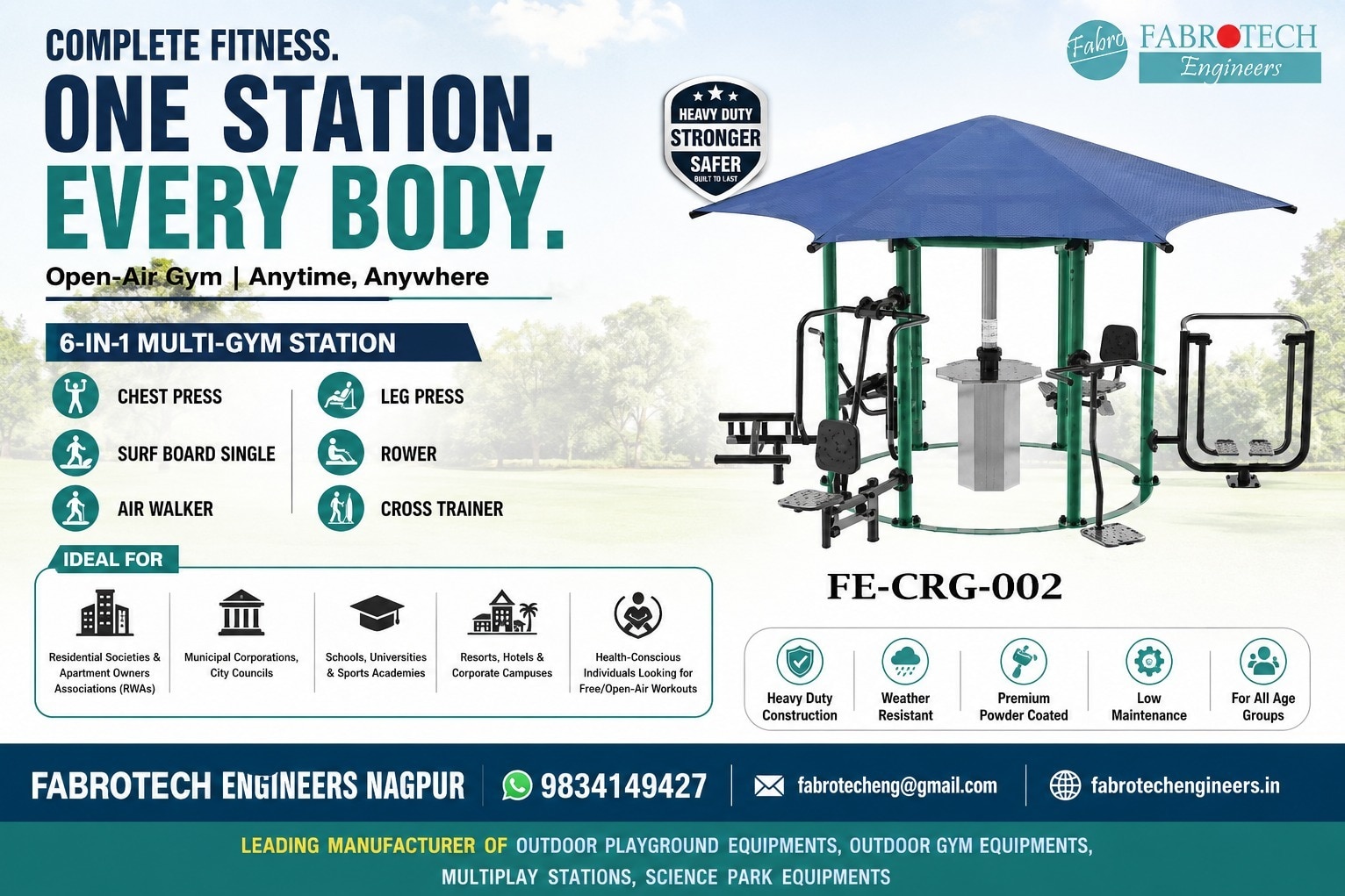
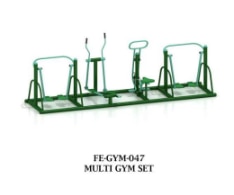 | OUTDOOR GYM MANUFACTURER Multi Gym Set – Complete Outdoor Fitness Solution The Multi Gym Set by Fabrotech Engineers is a versatile outdoor fitness system designed to support full-body workouts in parks, playgrounds, and open... View product → |
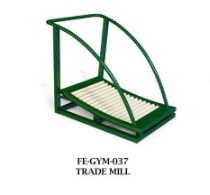 | OUTDOOR GYM MANUFACTURER Trade Mill – Outdoor Fitness & Cardio Equipment The Trade Mill by Fabrotech Engineers is a robust outdoor fitness equipment designed to promote cardiovascular health and physical endurance. View product → |
Make Safety, Supervision and Maintenance Part of the Fitness Plan
A certificate alone does not make an installed park compliant. Specify the named edition of ASTM F3101 for unsupervised public-use outdoor fitness equipment, or EN 16630 for permanently installed, freely accessible outdoor fitness equipment, then verify the completed layout against that standard and the manufacturer’s installation instructions.
This check must cover access routes, foundations, anchor bolts, fall areas, drainage, assembly and maintenance arrangements.
Use visibility, clear operating instructions and prompt reporting information to control misuse without assuming constant supervision. Mark intended users, movement limits and prohibited activities beside each station. Keep children’s play equipment separate, and inspect the full movement envelope: rotating arms, pedals and suspended parts can create pinch points or collision hazards outside the catalogue footprint.
- Run routine checks at a frequency based on use, climate and supplier instructions. Look for loose fasteners, vandalism, sharp edges, damaged surfacing, contamination and abnormal movement.
- Schedule technical inspections separately. Examine foundations, structural welds, bearings, cables, springs and corrosion; do not replace this inspection with a universal annual tick-box.
- Record each defect, isolate unsafe equipment immediately, assign a repair owner and close the entry only after a retest.
Make acceptance operational, not merely visual. Have representative users complete intended movements, test reach and transfer positions, confirm neighbouring stations do not conflict, verify signs and reporting details, and record baseline photographs plus torque or alignment checks. Those records let maintenance staff detect post-installation performance changes before a minor fault becomes a closure or injury.
Frequently asked questions
What should you assess before choosing outdoor multigym equipment?
Assess pedestrian access, ground conditions, drainage, shade, visibility, circulation space and the clearance required around each station.
How do you design an outdoor fitness circuit?
Arrange stations around movements rather than product names, including pushing, pulling, stepping, balance, mobility and core exercises.
What should an outdoor multigym purchase brief include?
Specify the intended users, exercise functions, dimensions, materials, anchoring, impact-absorbing surfacing, accessibility, installation and maintenance requirements.
How do safety and maintenance affect a park fitness area?
Plan supervision, user instructions, fall zones, routine inspections, cleaning, repair reporting and replacement of worn or damaged parts.
Related products
 | OUTDOOR GYM MANUFACTURER ₹164999 MULTI AVTIVITY GYM SET View product → |
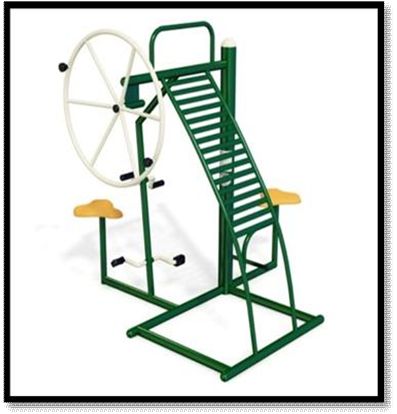 | OUTDOOR GYM MANUFACTURER 4 IN 1 COMBO ₹21500 Specification Main structure- Pipe- structure made of MS Pipe are 60od, 42 od and 32 od pipe OF 3 to 4 mm thickness Arm – structure made of MS pipe... |
 | OUTDOOR GYM MANUFACTURER BYCYCLE ₹22500 Specification Main structure- Pipe- structure made of MS Pipe OF 60od 42 OD AND 32 OD OF 3 to 4 mm thickness Bearing – Ball bearing (6205) Bearing... |
 | OUTDOOR GYM MANUFACTURER ₹65000 4 - LEG PRESS COMBO View product → |