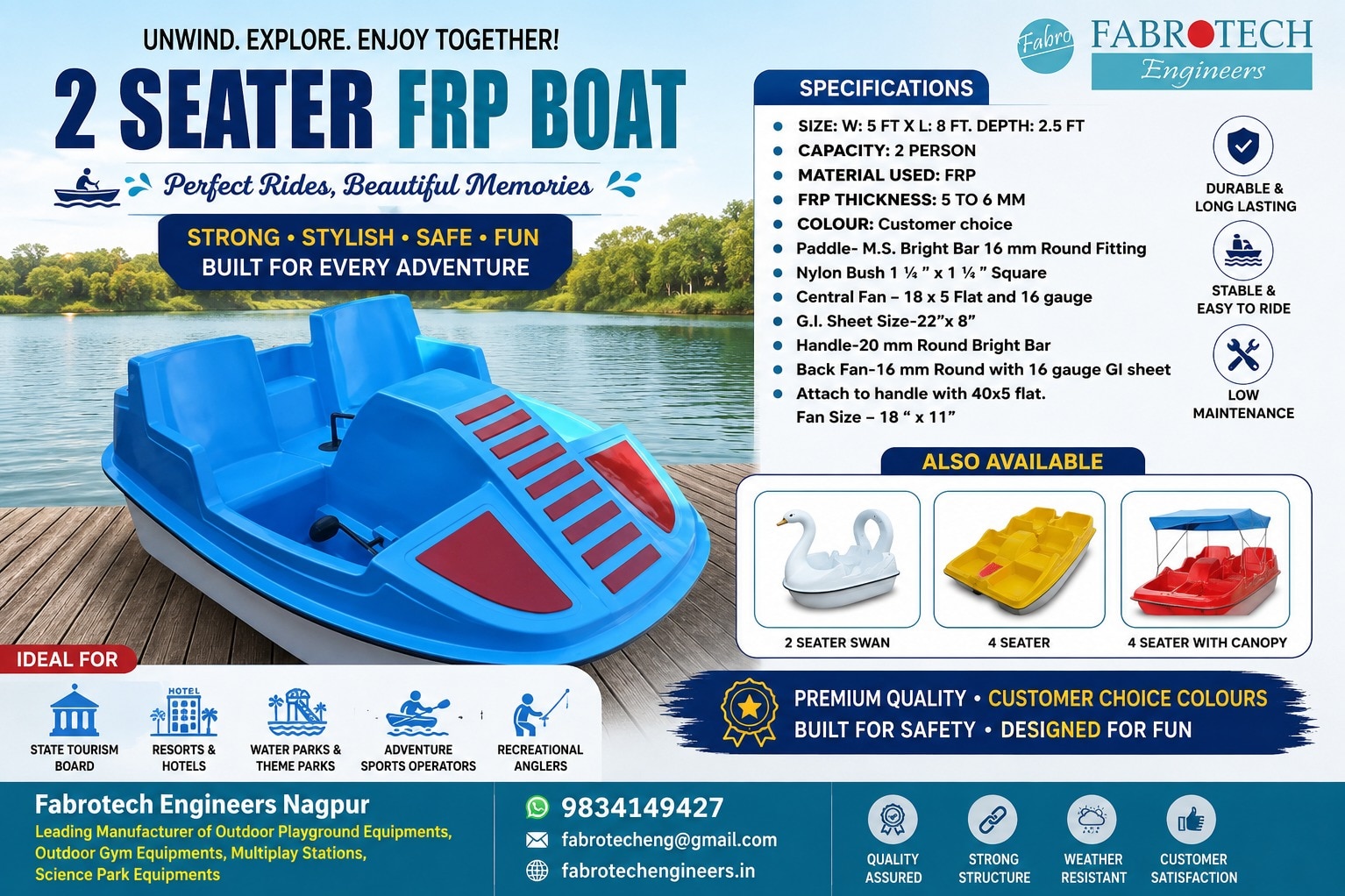
A two-person paddle boat can do more than occupy a pond: it can create a shared family activity, lengthen visits and add variety without engine noise. To make that value real, you need to match the boat layout to the water, design a controlled operating system and verify safety, maintenance and legal requirements before admitting passengers.
Key takeaways
- Use paddle boats where participation and longer visits support the facility’s goals.
- Match boat capacity, water depth and route length to your visitor experience.
- Design launching, queuing and boarding as one controlled operating system.
- Inspect boats, life jackets, water access and environmental controls before opening.
When a Two-Person Paddle Boat Adds Real Value
A two-person FRP paddle boat adds real value when it gives visitors a reason to participate, stay longer and explore more of the facility. It turns a water feature into a family activity, creating visitor engagement and increasing dwell time instead of serving as scenery that people photograph and leave.
Treat the boat as a small attraction system with measurable throughput. Approximate hourly passenger capacity equals available boats × two passengers × operating cycles per hour, reduced by loading, unloading, cleaning, late returns and boats held out of service.
A short ride can therefore create a queue and crowding at the launch platform even when the water looks empty.
The strongest contribution comes when the activity supports several visitor needs:
- Shared participation: two people must coordinate paddling, giving parents and children or friends an activity to do together.
- Attraction variety for parks and leisure facilities: a paddle boat adds a slower, water-based option beside play areas, walking routes, sports zones or viewing spaces.
- Longer visits: a timed session, queue and post-ride stop can keep groups on site beyond a single circuit.
- Repeat appeal: visitors can return to improve their route, try a different boat layout or include boating in another family outing.
Do not count every hull as usable capacity. An FRP hull is not automatically buoyant; request evidence of secured flotation and stability testing before treating the fleet as a dependable attraction.
Match the Boat and Water to the Visitor Experience
A compact pond is not automatically suitable. Map the marked operating area, pedal clearance, depth margin, wind exposure, currents, weed beds and submerged rocks before choosing a hull. The launch route also needs a firm landing platform, low step-over height, continuous handholds and enough room for an assisted transfer.
Boat dimensions change the experience, not just the appearance. Make a boarding access and stability comparison using the manufacturer’s tested load, freeboard and buoyancy evidence rather than assuming FRP will float when flooded.
| Model | Layout effect | Best fit |
|---|---|---|
| 4 ft × 9 ft × 3 ft swan model | Longer and taller profile; check turning space, visibility from the attendant point and storage clearance | Scenic rides where appearance and open-water manoeuvrability matter |
| 5 ft × 8 ft × 2.5 ft FRP model | Shorter, wider footprint with a lower profile; confirm boarding angle, pedal clearance and stability under the stated load | Families needing easier access in a compact operating area |
Match capacity to the visitors you expect:
- For two adults, verify maximum combined mass, seating trim and freeboard with both occupants seated in the tested positions.
- For an adult and child, prevent the child from shifting toward the bow or side; the trim condition differs from two adults.
- For older visitors or anyone with limited mobility, prioritise the stable landing platform, transfer assistance and recovery plan over decorative form.
If the water area cannot provide turning room and a clear depth margin, select a different layout or do not offer the activity there.
Design the Launch, Ride and Queue as One Operating System
Set the launch point as a controlled loop: queue, briefing, boarding, ride, return and exit. Keep arriving passengers away from returning boats by separating the entry and exit sides, then assign each boat a numbered berth or return lane.
Use the same operating sequence for every departure:
- Brief passengers to remain seated while underway, keep hands inside the boat and avoid reaching for the dock.
- Secure the boat before boarding, check that both passengers are seated, and dispatch only after the attendant confirms the route is clear.
- Secure the returning boat before allowing either passenger to stand, then direct them away from the launch area.
Set a fixed ride duration, such as 10 minutes, and enforce it with a visible clock or radio call. A short, consistent cycle controls the queue better than asking riders to return “soon.”
Calculate a throughput estimate as available boats × two passengers × operating cycles per hour, then reduce it for boarding, exit, cleaning, late returns and boats held out of service. Use that lower figure for queue signage and staffing, not the theoretical maximum.
Keep a shore-reachable recovery system ready, with a service boat or retrieval line, throw lines and radios. Remove any drifting or disabled boat from service until inspected. If boats use multiple lakes, clean, drain and dry hull recesses, pedal assemblies and drain points before transfer.
Specify Safety, Inspection and Environmental Controls
Confirm the passenger load rating, buoyancy and flotation documentation before accepting the boat. An FRP hull is not automatically positively buoyant; flooding can sink it unless secured flotation compartments or material keep it afloat.
Require boarding and recovery features, including a stable landing platform, low step-over height, continuous grab handles, non-slip flooring and a rescue plan for capsizing or falling overboard.
- Issue correctly sized personal flotation devices for every passenger, and define inspection, cleaning, drying and replacement procedures. Follow local law; in the United States, use wearable U.S. Coast Guard-approved life jackets.
- Record pre-opening and post-impact inspections, plus periodic examinations of flotation compartments, hull structure, gelcoat and laminate. Look for cracks, blisters, delamination and impact damage.
- Check pedal drives, shafts, rudders, seat mounts, drain fittings and fasteners for looseness, wear or corrosion. Use repair materials and methods compatible with the original laminate.
- Apply clean-drain-dry controls when moving boats between lakes. Inspect cavities, pedal assemblies, trailers and drain points for trapped water, mud, plants and animals.
| Control | Do not infer | Confirm in writing |
|---|---|---|
| Buoyancy | FRP cannot sink | Flotation assessment and compartment details |
| Capacity | Two seats equal safe loading | Passenger load rating and weight limit |
| Condition | Attractive gelcoat proves integrity | Inspection schedule and repair records |
| Recovery | Difficult to overturn means risk-free | Rescue equipment, staffing and capsize procedure |
Commission the Attraction Before You Open It to the Public
Do not place an order until the boat, site and operating plan have passed three checks: documented specification, legal approval and a supervised trial.
1. Ask the supplier for supplier documentation and warranty terms covering maximum persons, combined occupant mass, equipment load, stability and freeboard assumptions. Obtain the inspection schedule, flotation and hull examination requirements, approved repair materials, spare-part availability, and records of previous repairs.
A glossy gelcoat can hide laminate damage, while an incompatible repair can create a second failure. Ask Fabrotech Engineers to include these commitments in the quotation rather than relying on a verbal assurance.
2. Obtain local authority permission before construction or delivery. Confirm permission for commercial boating on that waterbody, shoreline works, water-quality controls, operating hours, emergency access and any environmental restrictions. Check the accessible route to the water, boarding platform and transfer arrangement; a wide seat does not make the activity accessible.
Arrange public-liability insurance that covers passenger injury, water rescue and staff operations.
3. Run the attraction with staff before admitting visitors. Test the actual launch and exit process, queue timing, life-jacket issue, wind and weather limits, buoyed boundaries, return lanes and a disabled-boat response.
Load the boat with the heaviest permitted passenger combination, then practise passenger recovery from the water using the equipment and staff assigned to the site. Record faults and correct them before opening.
Related products
 | KIDS PLAY GROUND MANUFACTURER 2 Seater Boat – Safe & Enjoyable Recreational Ride The 2 Seater Boat by Fabrotech Engineers is a sturdy and well-designed recreational boat ideal for lakes, parks, and amusement areas. View product → |
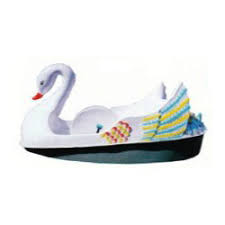 | BOAT EQUIPMENT MANUFACTURER ₹55000 SIZE: W: 4 FT X L: 9FT. DEPTH: 3 FT CAPACITY: 2 PEOPLE. MATERIAL USED: FRP FRP THICKNESS: 5 TO 6 MM COLOUR: Customer choice Paddle- M.S. View product → |
Frequently asked questions
When does a two-person paddle boat add real value to a park?
It adds value when the activity gives visitors a reason to participate, stay longer and explore more of the facility.
How should you match a paddle boat to the water and visitor experience?
Match the boat and route to the water conditions, visitor expectations and the type of experience you want to provide.
What should the launch and queue design include?
Plan the queue, boarding point, launch process and return route as one operating system so staff can control visitor movement.
What safety and environmental controls should you specify?
Specify suitable safety equipment, inspection routines, controlled water access and measures that protect the surrounding environment.
What should you do before opening a paddle-boat attraction?
Commission the attraction by testing the boats, launch process, visitor flow, staff procedures and safety controls before public use.