A low purchase price or an attractive product catalogue does not tell you whether equipment suits your users, fits the site or remains safe after months of heavy use. By the end, you will have a practical framework for comparing layouts, safety evidence, accessibility, maintenance demands and total ownership cost before approving an order.
Key takeaways
- Separate play areas by age, ability, supervision and expected daily demand.
- Measure equipment, surfacing, pathways, exits and clearances as one complete use zone.
- Request test reports, fall-height data and accessibility evidence before approving equipment.
- Price inspections, spare parts, repairs and site acceptance alongside the purchase cost.
Match the equipment to users, supervision and daily demand
Choose equipment by the users present, the number of daily users and the supervision available—not by the catalogue’s age label alone. Effective playground equipment selection separates toddlers, older children and children using mobility devices, then provides managed transitions between areas.
| Setting | Demand and supervision | Suitable selection |
|---|---|---|
| School | High use during breaks; staff supervision is concentrated and time-limited | Durable school playground equipment with clear sightlines, age-separated activity zones and quick visual checks |
| Public park | Mixed ages; supervision varies and peak use is concentrated after school and on weekends | Robust equipment for repeated use, clear circulation and activity choices that prevent fast-moving users crossing quiet play areas |
| Housing society | Regular smaller groups; adults supervise informally | Compact, low-maintenance equipment matched to resident ages, with safe visibility from homes and seating |
Do not place a high slide, fast spinner and toddler climber in one undifferentiated space. Different fall heights and play speeds increase collisions and make supervision harder, even when each product has certification.
Use the site’s operating purpose to reject mismatched products:
- For inclusive play, check the activity and transfer method: an accessible route alone does not make an elevated structure usable. Transfer platforms need clear floor space, handholds and a firm, stable transition from wheelchair routes.
- For interactive science installations, specify electrical isolation, enclosure rating, residual-current protection, emergency isolation and a safe state after power or communications failure.
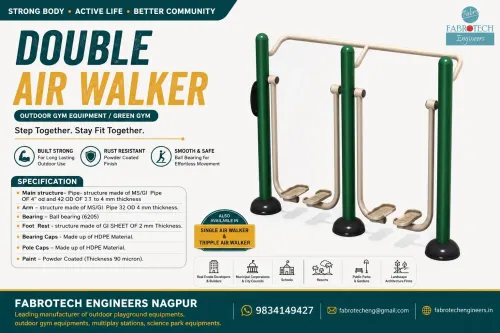
- For adult outdoor fitness stations, require evaluation against EN 16630, not a children’s playground standard.
Measure the complete use zone before approving the layout
Approve the site only after the full playground use zone fits on a measured plan, not merely after the equipment footprint fits. The drawing must show where children stand, move, queue and exit, including the space occupied during motion.
1. Measure the usable site in metres, then mark fixed obstructions: walls, fences, trees, drains, gates, lighting columns and overhead branches. Record slopes, finished grades and the location of accessible routes.
2. Obtain each item’s playground equipment dimensions and manufacturer’s installation drawing. Add platforms, steps, ladders, rotating parts and structural projections; do not measure only the outside posts.
3. Draw each equipment-specific use zone at scale. Check swing clearance along the direction of travel and to the sides, the clear landing area at a slide exit, and the movement envelope of seesaws and rotating equipment. Use the CPSC handbook or the specified standard rather than applying one generic perimeter to every item.
4. Add circulation paths, waiting areas and separation between adjacent items. Trace a child’s route from the gate to each activity and back out; a compliant impact surface cannot prevent collisions, blocked exits or crowding.
5. Have the installer verify the plan after construction. Check anchorage depth and torque, component orientation, bolts and caps, finished grade, use-zone dimensions and surfacing depth. Reject site changes such as shortened posts, relocated equipment or a shade structure inside a use zone until the layout is reviewed again.
The final drawing should also show transfer routes or ramps to the play components they serve. A ramp reaching the perimeter does not make a multilevel structure accessible.
Compare fall protection, safety features and accessibility evidence
Do not approve a product because its platform is low or its brochure says “rubber safety flooring.” Compare the equipment’s critical fall height with test evidence for the installed surfacing system, including thickness, sub-base and drainage.
| Type | Fall and safety checks | Inclusion evidence |
|---|---|---|
| Play equipment | Match the critical fall height to ASTM F1292 results and EN 1177 playground surfacing performance. Check entrapment gaps, pinch points, sharp edges, protrusions, guardrails and collision zones against recognised playground safety standards. | Require an accessible route to ground-level components. For elevated components, verify a ramp or transfer system, correct slope, clear transfer space, handholds and a firm, stable, slip-resistant transition. A perimeter ramp proves nothing by itself. |
| Outdoor fitness equipment | Use the adult-equipment requirements in EN 16630, not a children’s playground standard alone. Check moving clearances, crush and shear points, grip surfaces, anchoring, instructions, inspection access and the equipment’s fall surface. | Check whether controls, seats, grips and instructions suit the intended users, including people with limited reach, balance or strength. Confirm clear approach space and a usable transfer method where the activity requires one. |
| Interactive science-park equipment | Check electrical isolation, residual-current protection, emergency shut-off, enclosure rating, heat exposure, vandal resistance and safe behaviour after power, sensor or communications failure. | Test control height, reach range, tactile or visual feedback, audio alternatives and wheelchair approach space. Document the accessible operating sequence, not merely the route to the exhibit. |
Ask for current test reports, installation drawings and inspection instructions. Separate toddlers, older children and high-speed equipment so inclusion does not create collision or supervision hazards.
Turn the purchase specification into verifiable requirements
Do not approve a supplier from a catalogue image. Require a signed technical submittal identifying each item’s age range, capacity, platform height, potential fall height, use zone, anchorage method and installation sequence.
State whether the design follows EN 1176 playground equipment, ASTM F1487, or another named standard; do not treat one standard as proof for every installation.
Ask for these documents before comparing prices:
- Dimensioned plan showing use zones, swing and rotation clearances, queue space, gates and circulation routes.
- Structural calculations, foundation drawings, anchor specifications and concrete requirements.
- Surfacing test results to ASTM F1292 or EN 1177 for the installed thickness, sub-base and drainage configuration.
- Material and coating schedule naming steel grade, fasteners, tube-end sealing, galvanic isolation and below-grade corrosion protection.
- Installation, cleaning, repair and playground equipment inspection procedures, including inspection frequency and replacement parts.
- Accessibility drawings showing the accessible route, transfer platforms or ramps, reachable controls and accessible play components.
| Equipment type | Evidence to require | Construction details to verify |
|---|---|---|
| Children’s play | EN 1176 or ASTM F1487 compliance declaration | Fall height, entrapment protection, edge radii and impact surface |
| Outdoor fitness | EN 16630 documentation | Adult load rating, moving-part guards, instructions and maintenance access |
| Interactive or powered | Electrical code, ingress-protection rating and risk assessment | Residual-current protection, emergency isolation and safe state after power or communication failure |
For accessible playground equipment, demand more than a route to the perimeter. Fabrotech Engineers, for example, should provide item-specific drawings so a quoted slide or rotary unit can be checked against the actual surfacing, foundations and inspection plan.
Related products
 | KIDS PLAY GROUND MANUFACTURER Plain Slide 12 Foot – Classic Playground Fun The Plain Slide 12 Foot by Fabrotech Engineers is a safe and durable playground equipment designed for children’s outdoor enjoyment. View product → |
 | KIDS PLAY GROUND MANUFACTURER 4 Seater Seesaw – Fun-Filled Group Play Equipment The 4 Seater Seesaw by Fabrotech Engineers is a durable and engaging playground equipment designed to allow multiple children to play together... View product → |
Calculate maintenance, lifecycle cost and site acceptance duties
A low purchase price becomes expensive when parts, surfacing and labour are excluded. Calculate the playground equipment lifecycle cost before approval, including:
- Purchase, freight, installation and site preparation
- Surfacing replacement, drainage work and edge repairs
- Routine cleaning, inspections, tools and technician time
- Wear-item replacement intervals, spare-part prices and shipping
- Removal and disposal at the end of service life
Ask for a complete parts list, maintenance instructions, critical-component availability period and every playground equipment warranty exclusion. Proprietary fasteners, specialist tools or imported parts can turn a minor repair into a long closure.
Make payment conditional on documented site acceptance. Check anchorage depth and torque, bolt caps, component orientation, finished grade, use-zone dimensions and surfacing depth. Record changes such as shortened posts, relocated equipment or added shade structures; they can invalidate the original design assumptions.
Use a playground inspection schedule rather than relying on one annual vendor visit. Your playground maintenance checklist should assign daily or frequent checks for glass, vandalism, contamination and displaced surfacing, plus periodic checks of hardware, structural parts and surface depth. Each record needs the defect, interim control, responsible person and close-out date.
Treat drainage as a safety cost: define finished falls, sub-base drainage, edge restraints and roof-drip treatment. For outdoor fitness stations, require compliance with EN 16630, not a playground standard alone. Powered interactive equipment also needs electrical isolation, enclosure rating and a defined safe state during failures.
Frequently asked questions
How should you match playground equipment to users and daily demand?
Separate toddlers, older children and children using mobility devices, then assess supervision, peak occupancy and expected daily use before choosing equipment.
What must you measure before approving a playground layout?
Measure the equipment footprint, complete use zone, fall-protection surfacing, circulation paths, entrances, exits and clearances from walls, trees and other structures.
What safety and accessibility evidence should you compare?
Ask for documented fall heights, impact-attenuation test results, guardrail and barrier details, accessible route information and evidence that the installed design meets the stated requirements.
Which maintenance and acceptance duties belong in the purchase specification?
Specify inspection schedules, cleaning, corrosion checks, replacement parts, repair response, installation records, handover documents and site acceptance tests before placing the order.
Related products
 | KIDS PLAY GROUND MANUFACTURER The 6 Seater MGR by Fabrotech Engineers is a high-quality playground ride designed to accommodate six children at once, promoting group play and... View product → |
 | PLAYGROUND EQUIPMENT MANUFACTURER ₹21500 Central Pipe- structure made of MS Pipe OF 60 OD OF 2 to 3 mm thickness Seats - structure made of FRP Sheet(3 TO 4mm thickness) . View product → |
 | KIDS PLAY GROUND MANUFACTURER The Elephant Rider by Fabrotech Engineers is a fun and child-friendly outdoor play equipment designed to promote balance, coordination, and physical... View product → |
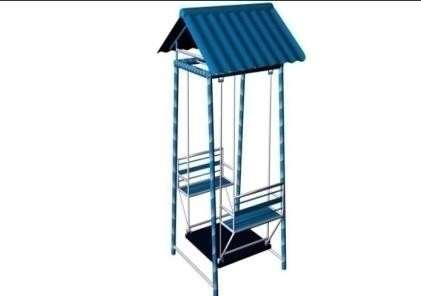 | PLAYGROUND EQUIPMENT MANUFACTURER ₹21500 Area : 1.5 M X 1.5 M Height : 2.0 M Accessories : 8 Nos. Gazan Pin For Moving Support Seating Capacity : 4 Seater Pipe- structure made of MS Pipe OF... View product → |