A portable toilet is sized by peak demand, service access and usable tank capacity—not by seat count or advertised dimensions alone. By the end, you will be able to calculate the required provision, test whether a site can accept the unit, and build a quotation that exposes missing transport, accessibility, servicing and compliance details.
Key takeaways
- Size cabins for peak demand, not average attendance.
- Convert tank volume into usable visits and service intervals.
- Check route access, ground conditions and accessibility before delivery.
- Put capacity, servicing, features and costs into a written specification.
Calculate Seat Capacity from Peak Demand, Not Average Attendance
Size portable toilet capacity for the busiest operating period, not the average daily attendance. Your peak demand calculation should estimate how many people need a seat at once, then convert that figure into separate cabins or multi-seat units.
- Identify the busiest 15- or 60-minute period, including arrival surges, meal breaks and alcohol consumption.
- Estimate users per hour during that period and multiply by the expected toilet visits per person.
- Allow for dwell time. For example, 120 visits per hour with a six-minute average stay creates about 12 simultaneous users: 120 × 6 ÷ 60.
- Set a toilet-to-user ratio using the local health code, event guidance and the site’s operating conditions. Do not apply a single ratio to every event.
- Round the required seat count up, then divide it by the number of seats in each proposed unit and round up again. Eight required seats need eight single cabins, four two-seat units or two four-seat units.
- Calculate male and female demand separately when the layout uses designated facilities; account for urinals only if they are actually available and accepted by the governing code.
- Add an accessible unit with the required internal clearances rather than assuming a standard cabin serves every user.
- Check that the holding tank, water supply and planned service interval support the same peak load. A seat count that works on paper fails when a full tank closes units early.
OSHA’s worker ratios are minimum workplace rules, not a dependable public-event sizing method. Keep a written assumption for attendance, peak arrivals, visits per person, dwell time and service interval so you can adjust the order when those inputs change.
Convert Tank Volume into Usable Visits and Service Intervals
A 200-litre tank does not provide 200 user visits. Calculate usable tank capacity after reserving freeboard, then divide it by flush water consumption. The same rule applies to a portable toilet water tank used for flushing or handwashing.
| Nominal water tank | Planning capacity at 80% usable volume | Visits at 2 L per flush | At 40 visits per hour |
|---|---|---|---|
| 200 litres | 160 litres | 80 flushes | About 2 hours |
| 500 litres | 400 litres | 200 flushes | About 5 hours |
| 1000 litres | 800 litres | 400 flushes | About 10 hours |
These figures are planning examples, not specifications. Confirm the actual flush volume, handwashing demand, pump operation and reserve stated by the manufacturer. A pour-flush or non-flush unit needs a different calculation.
Food, alcohol, hot weather and long events increase visits, so service the unit when either water reaches its refill threshold or waste reaches its service-out level.
Do not treat a 600-litre sludge tank capacity as 600 litres of extra user capacity. Liquid, solids, paper, chemicals and cleaning water consume that volume at different rates, and overflow risk depends on the waste mix. Ask for:
- Usable waste volume at the pump-out level, not only nominal sludge tank capacity.
- Separate flush-water, handwashing-water and waste capacities.
- The operator’s actual pump-out threshold and local health-code service interval.
- A freeze-protection, draining and winterization procedure for tanks, valves, lines, pumps and soap dispensers.
- The licensed collection and disposal route; never discharge waste into a storm drain, surface water or unapproved ground.
Match the Unit to the Site, Route and Accessibility Requirements
Choose the unit only after confirming that it can reach the site, sit securely, serve users safely and be serviced without crossing public queues. A portable toilet site survey should cover the delivery route, set-down area, user route and waste-removal route.
Record these site measurements before approving a cabin or trailer:
- Gate and road width, overhead branches, bridge limits, turning radius and reversing distance for towable toilet access
- Level set-down dimensions, roof clearance, door swing and space beside the unit for cleaning equipment
- Ground bearing for the filled unit, trailer wheels, stabilisers and service truck; soft soil can cause settlement or a rollover
- Slope, drainage, anchoring points and the documented method for levelling the unit
- The service vehicle’s approach, pump-hose reach and a route that avoids pedestrian queues
Do not place a unit with its door downhill and assume the slope is harmless. A sloping cabin can bind the door, shift its contents and undermine stabilisers; use engineered levelling and anchoring rather than loose blocks.
For a U.S. project, connect an accessible portable toilet to a firm, stable, slip-resistant route. The 2010 ADA Standards generally limit running slope to 1:12 and cross slope to 1:48. Provide the required landing, ramp and threshold detail; grass, loose gravel, a kerb or a steep temporary ramp can make an otherwise suitable unit unusable.
Confirm the disposal route before selecting tank size. Self-contained waste must go to an approved collection and disposal facility, never a storm drain, surface water or unapproved ground. Check local health, wastewater and event-permit rules, and use ANSI/ASSE Z4.3 as a procurement reference rather than a substitute for local approval.
Choose the Toilet Type and Specify Day-to-Day Operation
Choose a single cabin for low-volume, dispersed use: a small worksite, market or park location with one serviceable access point. Choose a multi-cabin unit when several users need toilets at once and the site can accept one larger footprint.
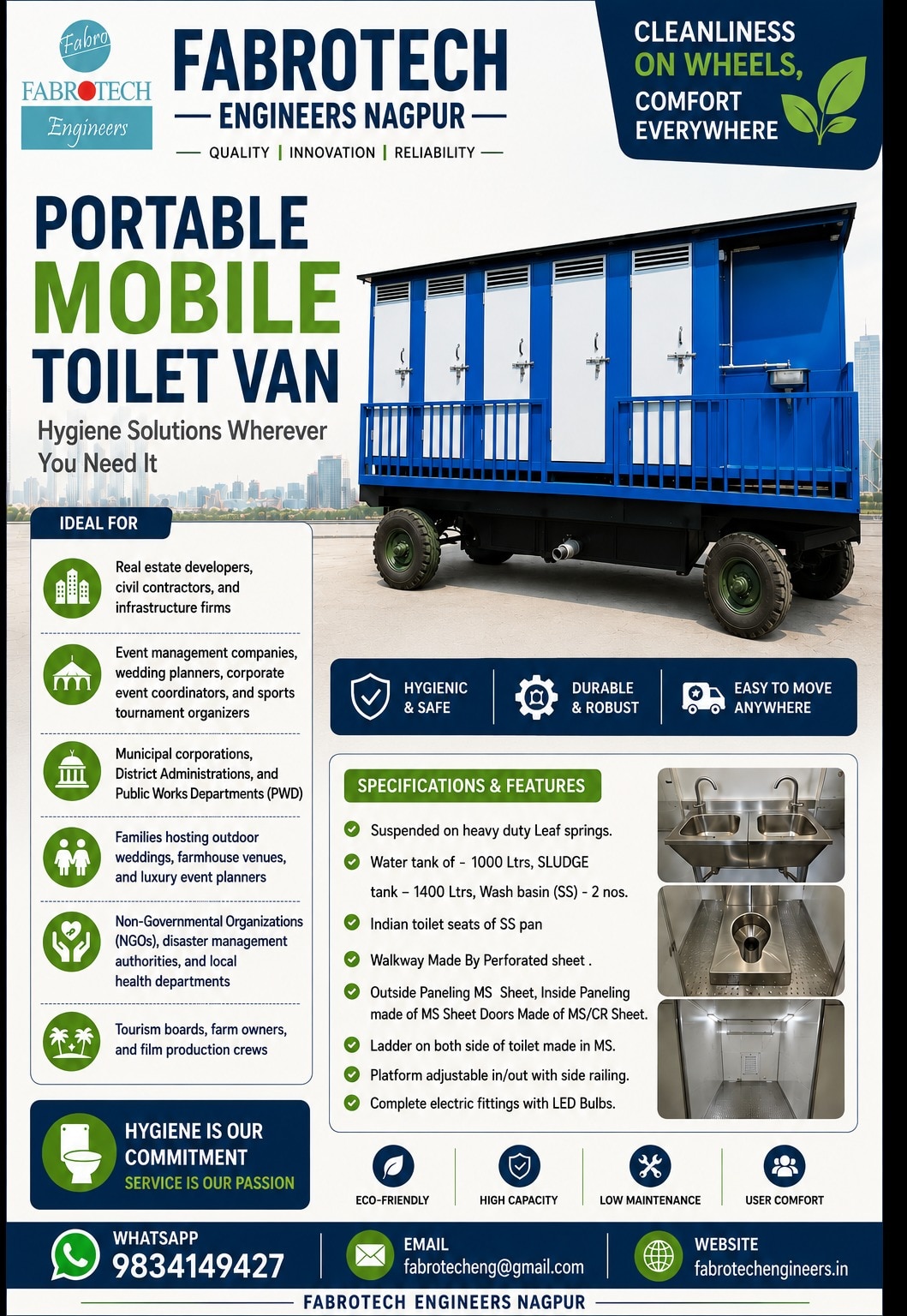
Choose a mobile toilet van when peak demand is high, the event lasts several hours, or you need multiple fixtures, attendants and rapid relocation.
| Option | Best fit | Confirm before ordering |
|---|---|---|
| Single cabin | Low or spread-out demand | Accessible route, anchoring and service access |
| Multi-cabin unit | Fixed site with concentrated queues | Seat mix, gender allocation and accessible compartment |
| Mobile toilet van | Large events and high turnover | Vehicle access, parking, power, water and waste connections |
Select an Indian toilet pan versus Western toilet from the users’ needs, not appearance. Confirm whether the system is flush, pour-flush or non-flush, and identify the included flush pump, supply tank, waste tank, treatment chemicals and level indicators.
Write the daily operating plan into the quotation:
- Provide a separate handwashing station with potable water, soap and drying equipment; an internal sanitizer dispenser is not automatically equivalent.
- State who unlocks, cleans, restocks and records inspections.
- Define portable toilet servicing frequency, maximum fill level, emergency call-out time and the service truck’s access route.
- Specify minimum operating temperature, freeze protection, draining and winterisation for every water-bearing component.
- Confirm lighting, ventilation, bins, ramps, handrails and anchoring where the unit is accessible or placed on uneven ground.
Compare Total Cost and Turn the Purchase into a Written Specification
A low headline price can hide transport, cleaning, water delivery, pump-outs and winterization. Compare toilet rental versus purchase over the same operating period, including removal and end-of-life costs.
| Option | Compare | Ask the supplier to state |
|---|---|---|
| Rental | Delivery, weekly fee, servicing, collection and damage charges | Total cost for the full hire period and each extra service visit |
| Purchase | Unit price, installation, maintenance, transport and resale or disposal | Warranty, replacement parts, service rates and expected service life |
| Either option | Waste disposal, water supply, cleaning and permits | Who pays, who performs each task and what is excluded |
Turn the portable toilet quotation checklist into a specification rather than accepting “500-litre capacity.” Require separate figures for usable waste volume at the service-out level, flush-water consumption per visit, handwashing-water capacity, reserve or freeboard, and whether liquid or solids reach the limit first.
If you request a quote from Fabrotech Engineers, use the same specification for every supplier so advertised tank sizes are comparable.
- State the licensed waste-disposal route; prohibit discharge to storm inlets, surface water or unapproved ground, and identify required municipal or state permits.
- Request a dimensioned drawing for wheelchair turning space, water-closet clearance, door manoeuvring space, grab bars, seat height and flush-control operation. “ADA” alone proves nothing.
- Specify the minimum operating temperature, freeze protection and winterization procedure for valves, lines, pumps, handwashing tanks and soap dispensers.
- Require the applicable portable toilet compliance documents, including ANSI/ASSE Z4.3 where relevant, plus site rules. On construction sites, price a potable-water handwashing station with soap and individual towels separately.
Related products
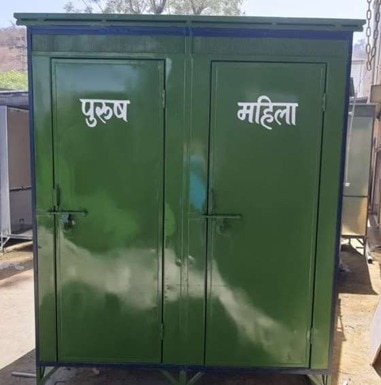 | MOBILE TOILET MANUFACTURE ₹80000 Size L -6’, W -3’, H – 9.5’ Portable Toilet Made by MS Sheet 18 Guage Steel Body with Indian toilet(S.S Pan) seats, 500 Ltrs, Sludge Tank made by FRP... View product → |
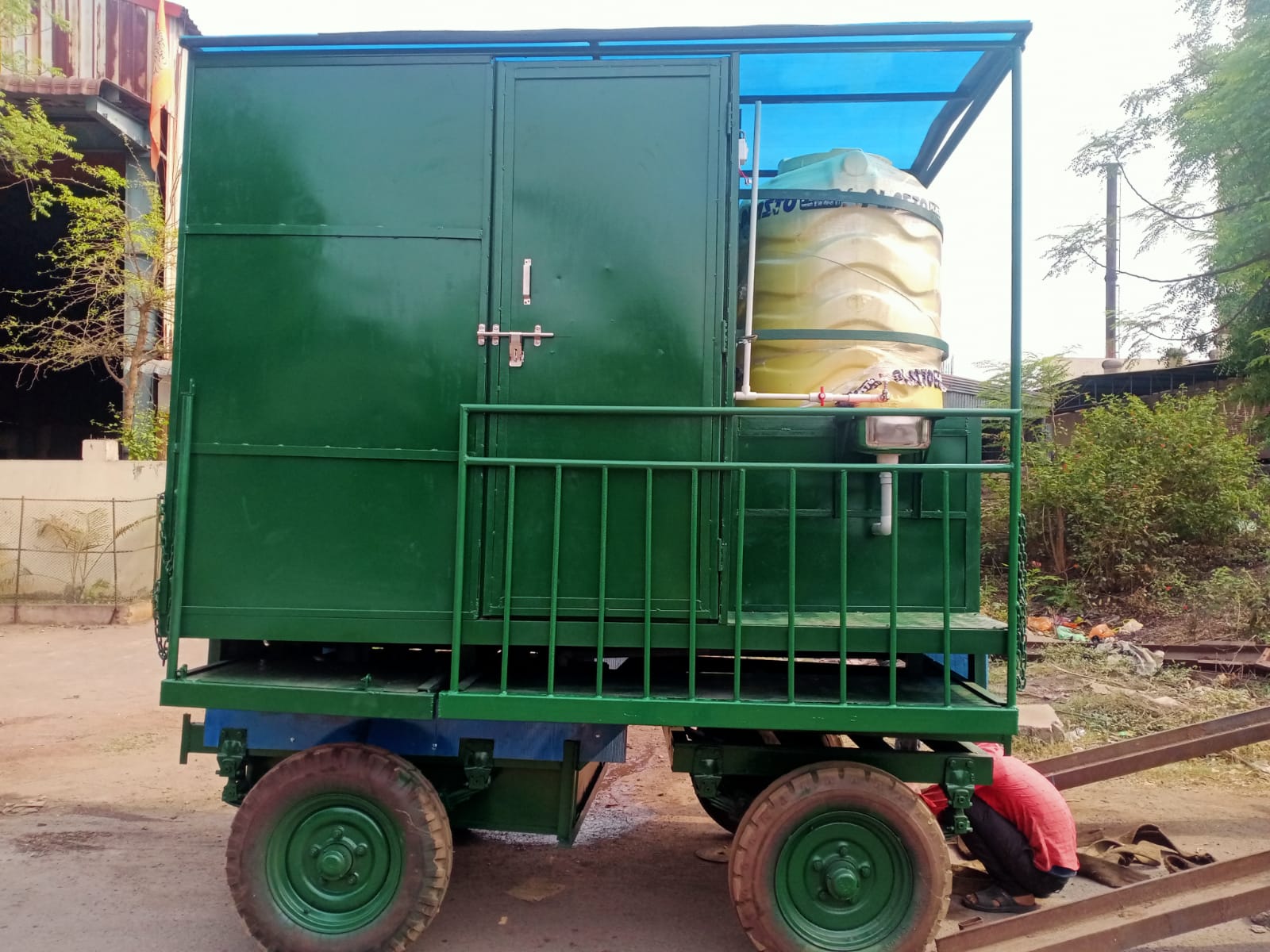 | MOBILE TOILET MANUFACTURE ₹190000 Size L -9’, W -3’, H – 9.5’ Length of Toe 5’, Chassis made of C Chanel 100 x 50 mm, Floor made of C Chanel 100x50mm , Axle 75 x 75 mm sqr. View product → |
Frequently asked questions
How do I calculate the right portable toilet capacity?
Base capacity on peak attendance and the number of people needing a seat at the same time, then select separate cabins or multi-seat units.
How do I convert tank volume into usable visits?
Estimate usable visits from tank volume, expected waste per visit and the reserve needed before servicing; use the result to set service intervals.
What site conditions affect portable toilet selection?
Check delivery-route width, turning space, surface stability, slope, placement distance, drainage constraints and access for servicing vehicles.
How should I compare portable toilet costs?
Compare purchase or hire price with delivery, installation, cleaning, waste removal, consumables, repairs, accessibility features and replacement costs.
Related products
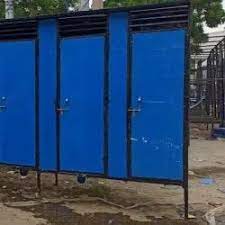 | MOBILE TOILET MANUFACTURE ₹120000 Size: L-9’, W-3’,H-9.5’ Single Seated Portable Toilet Made by MS Sheet 18 Guage Steel Body with Indian toilet(S.S Pan) seats, 500 Ltrs, Sludge Tank... View product → |
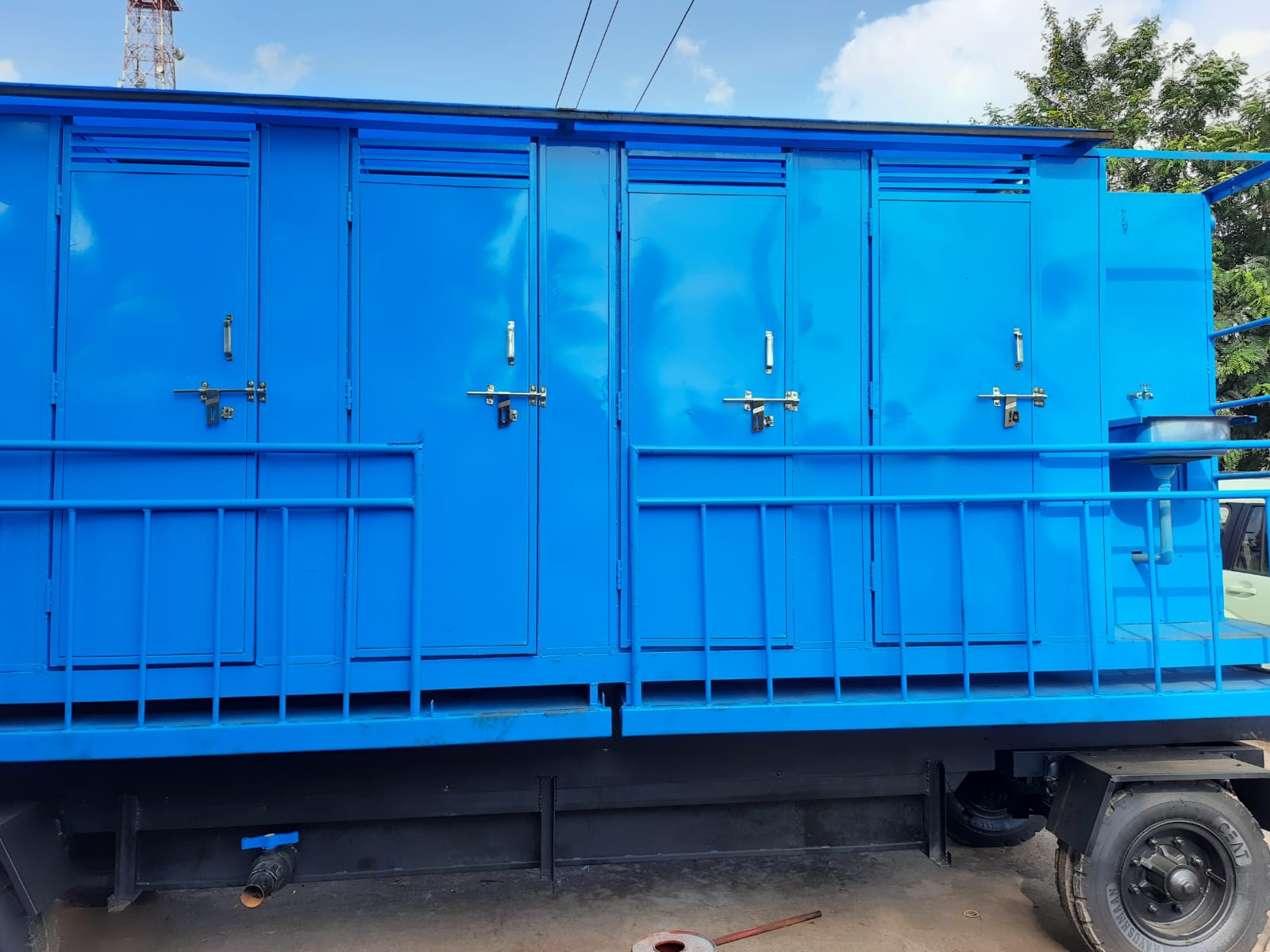 | MOBILE TOILET MANUFACTURE ₹320000 Size L -15', W -6', H - 10'.5” , Length of Toe 5', Chassis made of C Chanel 100 x 50 mm, Floor made of C Chanel 100x50mm, Axle 75 x 75 mm sqr. View product → |
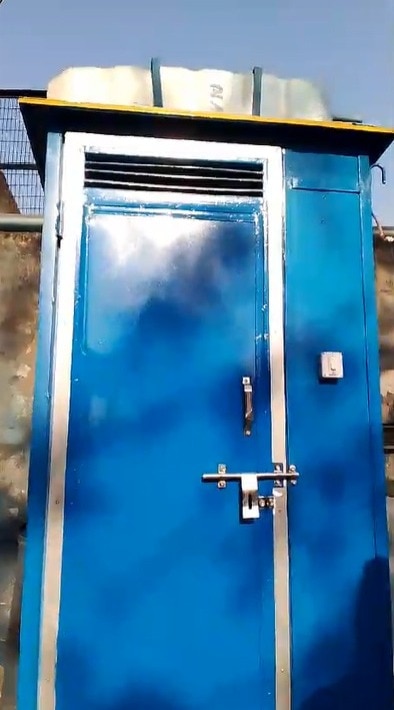 | MOBILE TOILET MANUFACTURE ₹44000 Size: L-3’, W-3’,H-9.5’ Single Seated Portable Toilet Made by MS Sheet 18 Guage Steel Body with Indian toilet(S.S Pan) seats, 200 Ltrs, Sludge Tank... View product → |
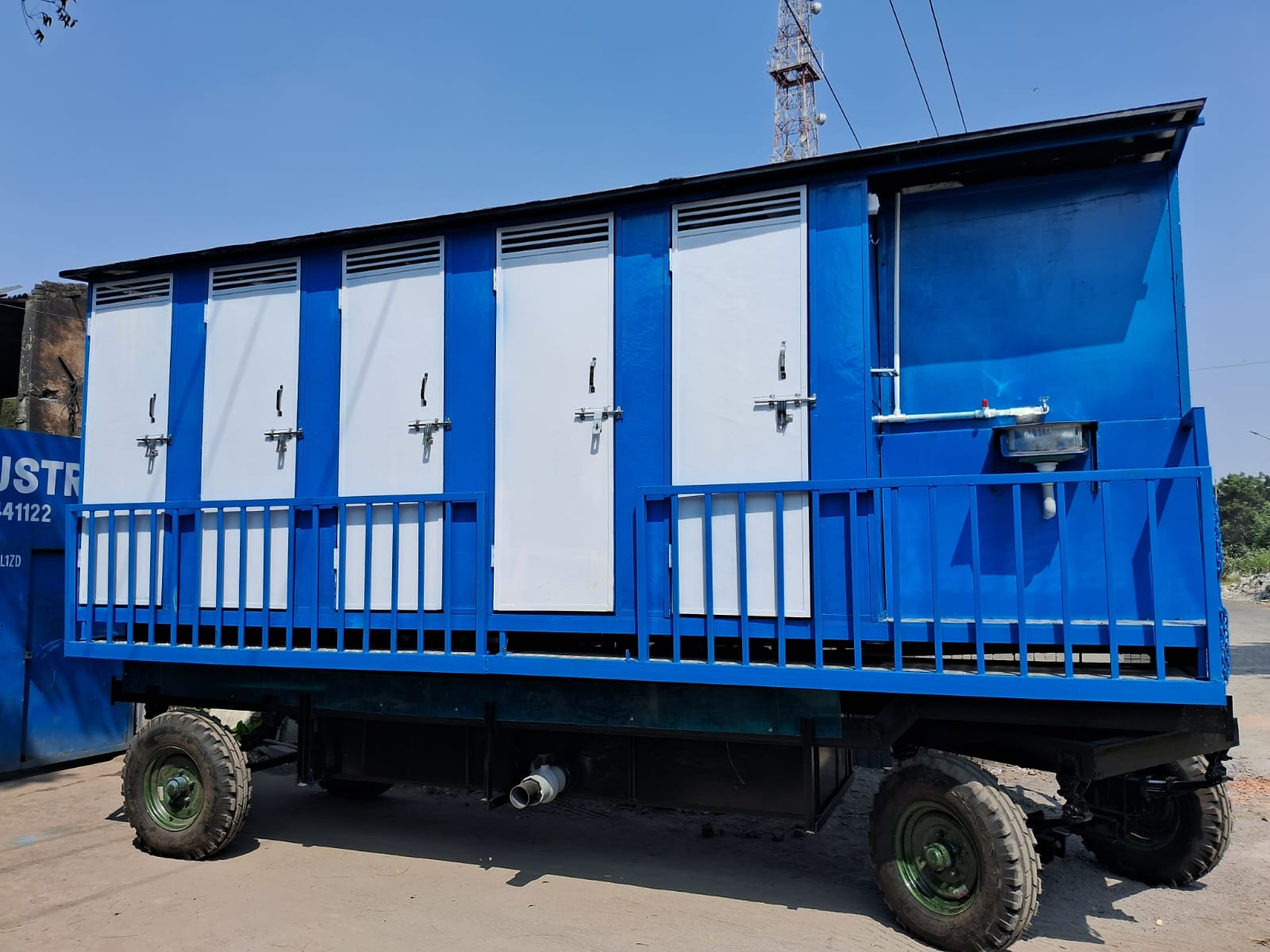 | MOBILE TOILET MANUFACTURE ₹365000 Van Size L -19', W -6', H - 10'.5” , Length of Toe 5', Chassis made of C Chanel 100 x 50 mm Floor made of C Chanel- 100x50mm, Axle 75 x 75 mm sqr. View product → |
Keywords