Rain, standing water, scratched surfaces and trapped moisture can attack steel beneath an attractive finish. You will learn how powder coating forms its protective film, which preparation and design details prevent early corrosion, and how to judge whether a specified coating suits the equipment’s actual environment.
Key takeaways
- Treat welds, edges and hidden steel before applying powder.
- Compare coating systems by pretreatment, film thickness and exposure testing.
- Do not accept a 90-micron claim without checking coverage and adhesion.
- Inspect chips, rust spots and drainage points before corrosion spreads.
How powder coating creates a barrier against outdoor corrosion
Steel stays protected only while the coating remains continuous and well bonded. Powder coating is not corrosion control by itself: it works as one layer in a system that includes clean steel, pretreatment, the powder film and sound design.
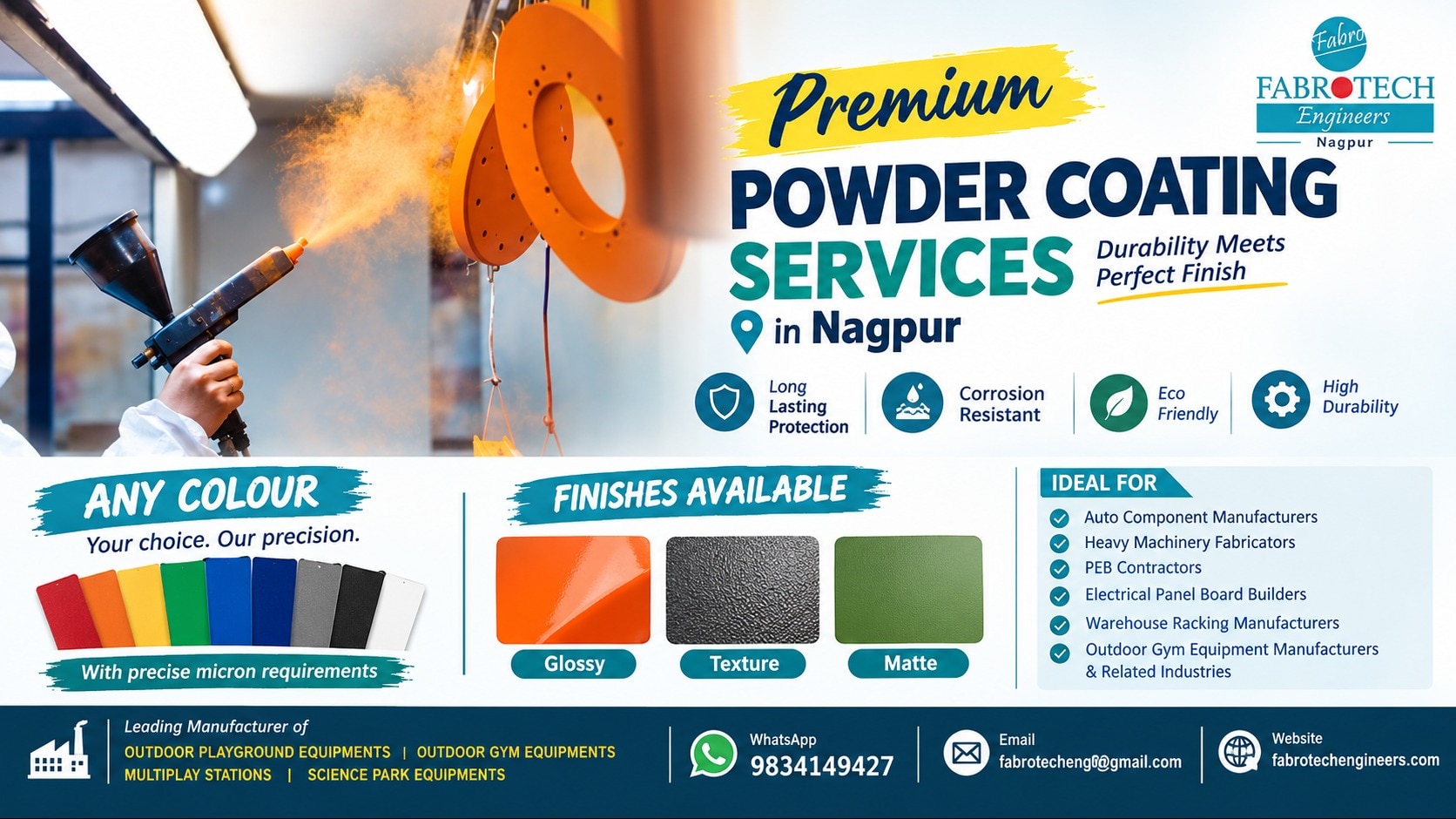
The powder coating process removes contamination, adds a phosphate or zirconium conversion layer, then uses electrostatic powder application to place charged particles on the part. Oven curing melts and cross-links those particles into a bonded protective film that separates steel from water, oxygen, salts and pollutants.
When the film is damaged or misses a feature, look first at these starting points:
- A scratch, chip or assembly mark that exposes bare steel.
- A cut edge, drilled hole or sharp edge with thin coverage.
- A weld, spatter deposit or heat-affected area that was not cleaned correctly.
- An unsealed lap, crevice, tube end or pipe interior that traps water.
Corrosion begins at the first exposed steel, not across an intact flat panel. Water enters the break, dissolves salts and carries oxygen to the metal; rust then expands and can lift the surrounding film, allowing underfilm corrosion to spread. At bolted interfaces, dissimilar-metal contact can also create galvanic corrosion.
Powder film is not a dependable electrical or crevice seal after drilling, fastening or assembly, so drainage, isolation and sealed joints remain part of the protection system.
Why preparation, welds and hidden surfaces decide coating life
Powder cannot protect oil, welding residue or trapped salts beneath its film. Specify degreasing, abrasive blasting, mill scale and rust removal, followed by phosphate pretreatment or zirconium pretreatment, rinsing and complete drying. Skipping one step gives the coating a clean-looking surface with a weak bond underneath.
Fabrication details decide whether preparation reaches the whole part:
- Radius sharp edges and remove weld spatter; powder pulls away from knife edges and spatter creates thin, damaged spots.
- Seal lap joints or redesign them; an unsealed crevice holds water and road salts after the outside film looks intact.
- Add drain and vent holes to hollow sections, and close tube ends; trapped water corrodes from inside.
- Review deep recesses, bolt holes and cutouts with the applicator; the Faraday-cage effect can leave these areas with little powder.
| Feature | Failure risk | Detail to specify |
|---|---|---|
| Welds and edges | Undercured or poorly bonded film | Post-weld cleaning, spatter removal and edge radiusing |
| Cavities and tube ends | Internal corrosion and trapped rinse water | Drainage, venting and a defined interior-coating requirement |
| Recesses and holes | Low powder deposition | Grounding, gun access and inspection of representative parts |
Ask for dry-film thickness across edges, welds, formed sections and hidden faces, not only a flat panel. Thickness and adhesion are separate checks: use ASTM D3359 tape testing on representative features, because a passing flat coupon cannot prove adhesion on a weld or bend.
A heavy film is not automatically safer; excessive powder can crack, cure poorly or interfere with assembly.
Choosing powder coating against paint, galvanizing and outdoor exposure
Choose powder coating when outdoor equipment needs a tough, uniform finish for rain, UV exposure, pollution and sprinkler water, and the fabricator can prepare and cure the complete system correctly. Specify exterior-grade polyester powder or super-durable polyester; ordinary epoxy powder adheres well and resists chemicals, but prolonged sunlight usually causes chalking and colour loss.
| Option | Main strength | Best fit and limitation |
|---|---|---|
| Polyester powder | Hard, uniform UV-resistant film | General outdoor equipment; needs sound pretreatment and sealed edges |
| Super-durable polyester | Better colour and gloss retention | Strong sunlight, long exposure and high-appearance installations |
| Epoxy powder | Adhesion and chemical resistance | Indoor or sheltered parts; usually unsuitable as the exposed outdoor finish |
| Galvanizing | Sacrificial zinc protection at exposed steel | Severe corrosion risk; surface appearance, drainage and touch-up need planning |
| Wet paint | Simple field repair and broad application range | Useful for repair or large fixed structures; film build, solvent emissions and UV life need checking |
For coastal air, de-icing salt or chlorinated splash zones, compare systems using neutral salt spray under ASTM B117, but do not convert test hours into service years. Require an agreed failure limit for scribe creep, blistering and underfilm corrosion, plus cyclic-corrosion or real-weathering data when exposure is severe.
A zinc-rich primer beneath a compatible powder topcoat adds sacrificial protection after a scratch, but it requires qualified zinc loading, cure, intercoat adhesion and repairs. Powder is the wrong choice when the part cannot be cleaned, drained or oven-cured; trapped moisture and damaged interfaces will defeat an excellent film.
How to judge a coating specification beyond a 90-micron claim
A 90-micron coating claim proves only a target thickness, not coating performance. Require a dry-film-thickness range, test locations and signed inspection records for the actual parts, including edges, welds, bends and assembled interfaces.
1. Measure thickness with a calibrated gauge under ASTM D7091. Record readings at defined locations and reject results outside the agreed range; excessive film can crack, cure poorly or interfere with assembly.
2. Check adhesion separately under ASTM D3359. Use representative welds, edges and formed sections, not only a smooth test panel, and retain photographs showing the tape cuts and classification.
3. Confirm cure from the metal part’s measured temperature and dwell time, rather than the oven air setting. Keep the cure chart, powder batch and line record; add an agreed solvent-resistance test such as ASTM D5402 when specified.
4. Specify impact resistance under ASTM D2794, with the impact energy, test face and pass/fail result. Impact performance does not prove abrasion resistance, UV stability or corrosion protection.
5. Use ASTM B117 salt spray testing with a stated exposure duration and failure criterion covering blistering, rust and scribe creep. Salt-spray hours do not translate directly into outdoor service years, so request cyclic-corrosion or weathering data when exposure demands it.
6. Verify colour retention through an agreed UV or xenon-arc exposure method, recording colour change and gloss loss against limits. Ask for instrument readings, exposure conditions and the powder batch certificate, not a colour name alone.
How to specify, inspect and maintain coated outdoor equipment
Require a coating schedule before you approve the purchase, not just a colour and a nominal 90-micron claim. The schedule should identify preparation, pretreatment, primer, powder type, cure conditions, a dry-film-thickness range for the complete system, inspection method and repair materials.
1. Ask whether the exposure requires a zinc-rich primer, and how welds, cut edges, drilled holes and pipe interiors will be treated. Require records showing batch identification, cure verification and thickness readings taken with a calibrated magnetic or eddy-current gauge under ASTM D7091.
2. Separate performance claims by test. ASTM D2794 impact resistance addresses rapid deformation; ASTM D4060 addresses abrasive wear. Neither proves UV life or corrosion protection, so request the agreed salt-spray failure criterion, such as scribe creep or blistering, rather than accepting “1,000 hours” alone.
3. Inspect joints and fasteners after installation. Look for chipped film, trapped water and dissimilar-metal contact, which causes galvanic corrosion. Replace damaged fasteners with compatible materials, use isolation washers, seal interfaces where specified and keep drain holes open.
4. Treat a scratch promptly: clean away rust and salts, abrade sound surrounding film, apply the approved primer and compatible touch-up coating, then document its location. Do not brush ordinary enamel over powder coating and call the repair complete.
For equipment commissioned from Fabrotech Engineers, put these inspection and repair responsibilities in the purchase order, including who supplies matching touch-up material and who approves field repairs. Never weld or drill through a coated member without treating the exposed steel immediately.
Related products
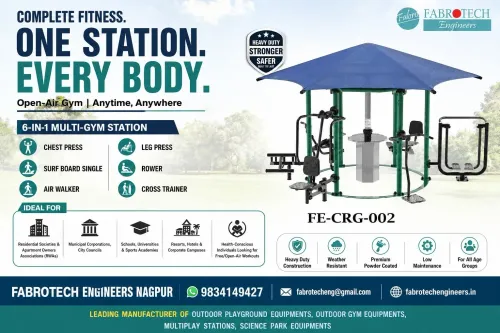
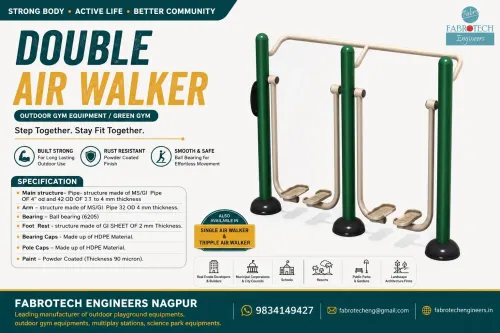
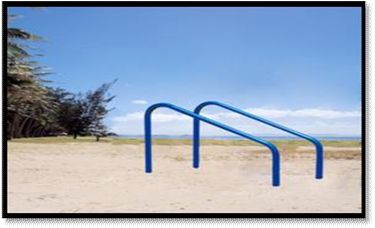 | OUTDOOR GYM MANUFACTURER ₹12000 Main structure- Pipe- structure made of MS pipe are 4” and 42 od pipe. Paint – Powder Coated (Thickness 90 micron) View product → |
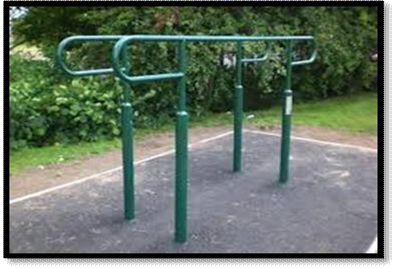 | OUTDOOR GYM MANUFACTURER ₹9500 Specification Main structure- Pipe- structure made of MS Pipe OF 3” and 32 OD OF 3 to 4 mm thickness Paint – Powder Coated (Thickness 90 micron)... View product → |
Frequently asked questions
How does powder coating protect metal from outdoor corrosion?
It forms a continuous, bonded polymer barrier that separates steel from moisture, oxygen and salts. Protection fails when poor preparation, chips or uncoated areas expose the metal.
Why do preparation, welds and hidden surfaces affect coating life?
Oil, mill scale, rust and welding residue prevent adhesion. Welds, sharp edges, crevices, tube interiors and drainage holes need specific preparation because they collect moisture or receive less coating.
Is powder coating better than paint or galvanizing outdoors?
Powder coating provides a durable, uniform finish, while liquid paint is easier to repair and galvanizing offers sacrificial zinc protection. Select between them according to exposure, damage risk, repair access and the required appearance.
Is a 90-micron powder coating specification enough?
No. Confirm the substrate preparation, pretreatment, powder type, measured dry-film thickness, adhesion, cure record and coverage of welds and hidden surfaces. Thickness alone does not prove corrosion resistance.
Related product
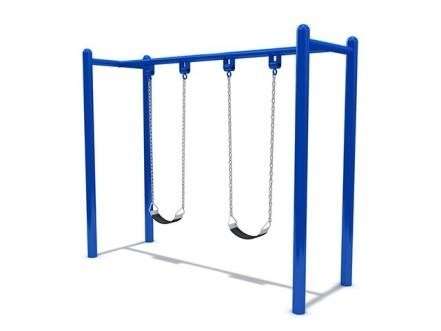 | PLAYGROUND EQUIPMENT MANUFACTURER ₹14500 Pipe- structure made of ms. Pipe OF 60 od and 25 od pipe OF 3 to 4 mm thickness Seats- structure made of arc belt OF 3 TO 4 mm Thickness. View product → |